Questions to Ask Before a Hysterectomy (and What to Get in Writing)
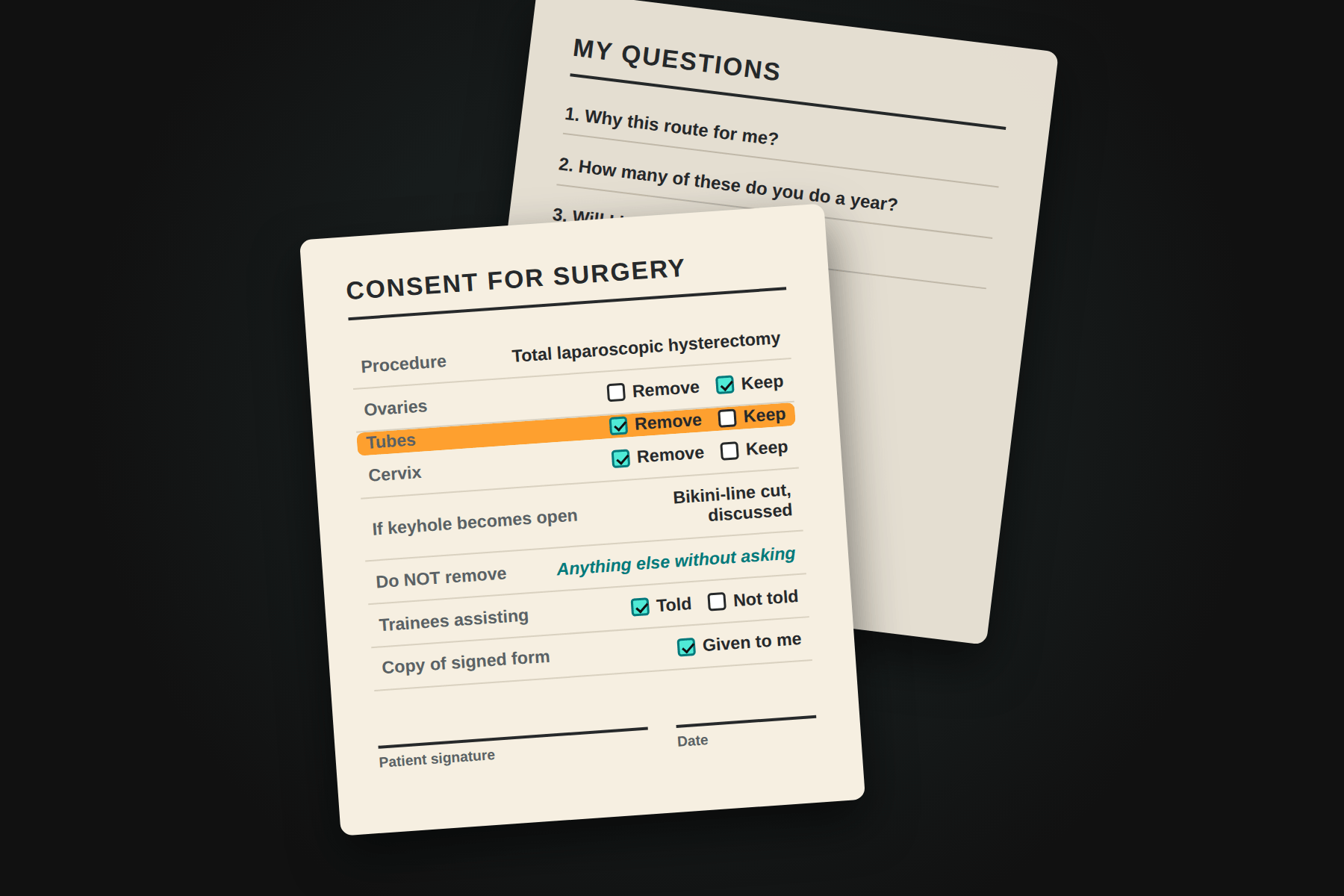
The questions to ask before a hysterectomy: ovaries, tubes and cervix, the consent form, the operation itself, your medicines, and what to get in writing.

 Mallory Milne
The questions to ask before a hysterectomy: ovaries, tubes and cervix, the consent form, the operation itself, your medicines, and what to get in writing.
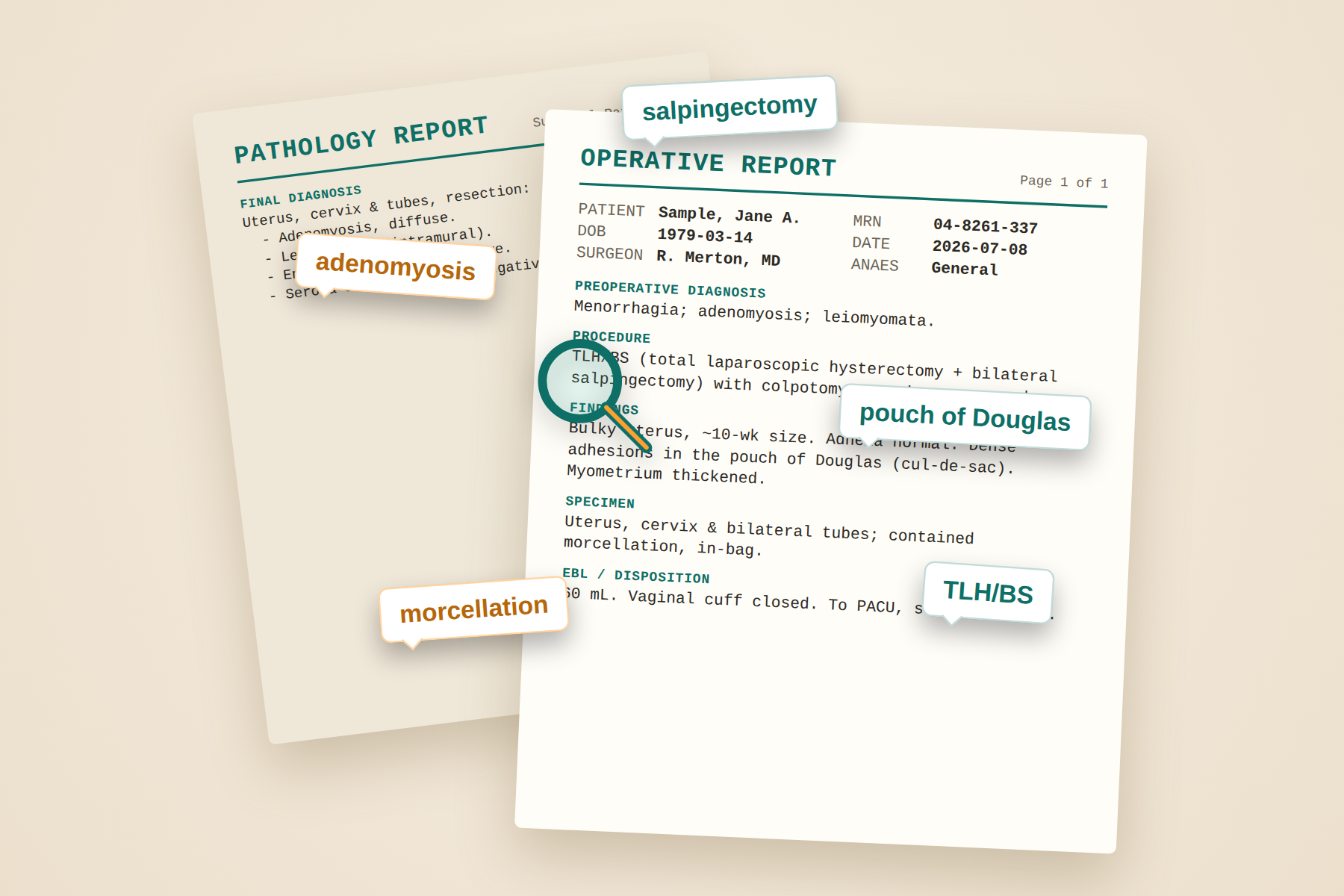
Two documents came out of your hysterectomy. The operative report is your surgeon’s account of the operation, written right after it. The pathology report comes later, from a doctor you never met, after a lab examined what was removed. Both can be requested from the hospital in Canada, the US, and the UK. Here’s how, and what the words mean.

There’s a wait for a reason, and everyone will hand you a different number for it: UK guidance says at least four to six weeks, US guidance often runs six to twelve. If your cervix came out, clearance is about the top of the vagina healing closed. The first time is often tender, sometimes drier, sometimes emotional. Long-term, it can go either way: better for some, worse for others.
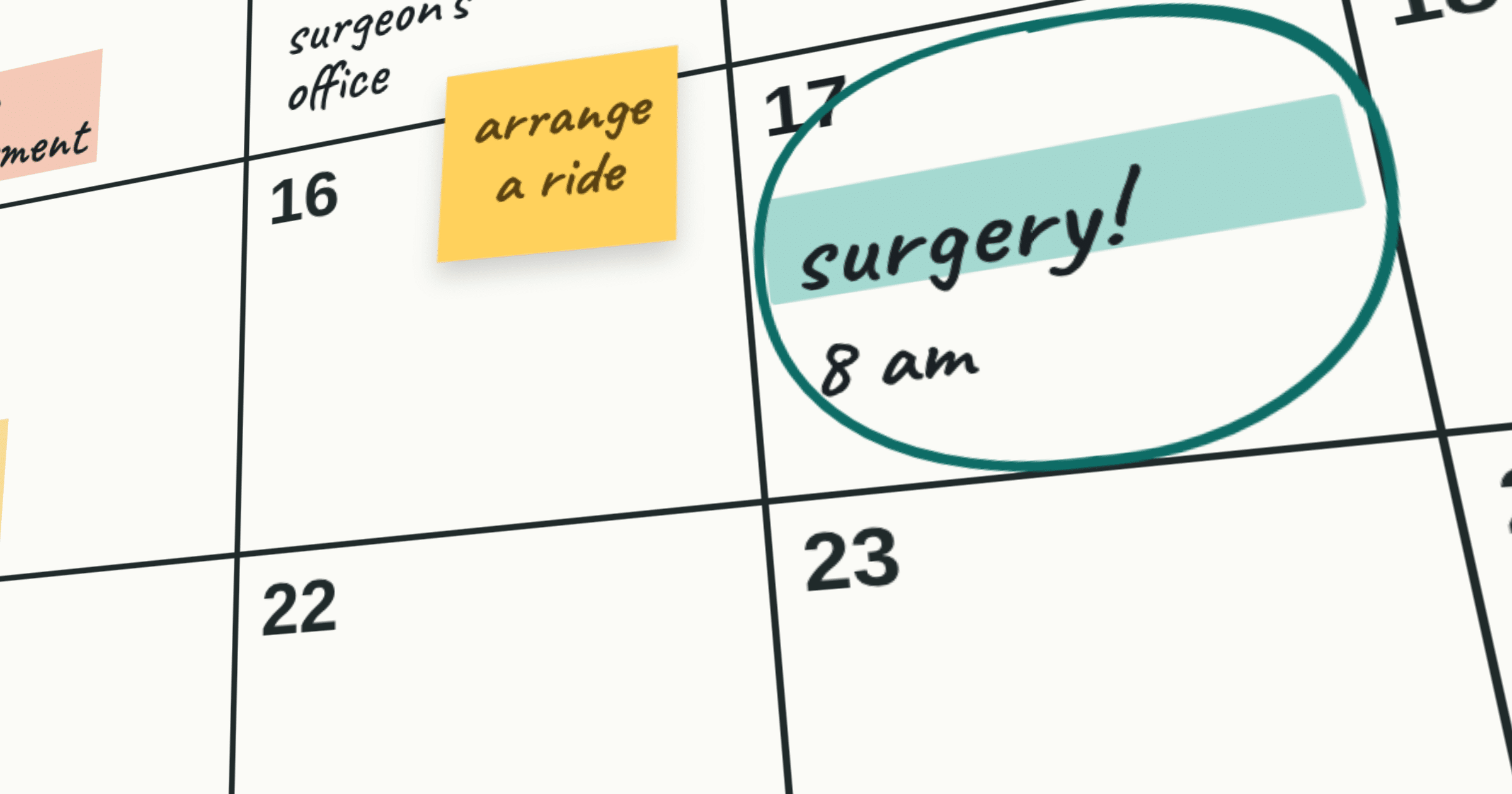
Preparation starts the day you book, not the week before. The two biggest pieces aren’t calendar items at all: settling exactly what’s being removed and getting it written down, and lining up the help you’ll need at home. Everything else is a short list, most of it for the last two weeks.

It’s normal, and it isn’t only about hormones. Crying at everything in the early weeks is common enough that surgeons’ own recovery leaflets bring it up, and it happens whether you kept your ovaries or not. For most women it fades as recovery does. Feeling down most of the day, nearly every day, for two weeks is different: take that to your doctor.

Almost nothing is off the menu, and nobody has invented a hysterectomy diet you need to stick to. Eat as soon as you can face food; the women who ate early recovered slightly faster, not slower. For six weeks the job is keeping energy up and keeping things moving. Then the focus shifts, for good, to your bones.
Whether you’re looking to rebuild strength, enhance muscle tone, or lose weight, weightlifting after a hysterectomy can offer numerous benefits that pave the way for a healthier future. This comprehensive guide will cover everything you need to know about weightlifting after a hysterectomy. Understanding the basics can help you create a safe and effective workout

Nootropics are cognitive enhancers that can help to improve focus, memory, and mood. Discover more about the science behind these natural supplements here.

Having a hysterectomy can sometimes cause unintended weight gain. Learn about how supplements may help with appetite control and healthier weight loss goals.

Experiencing loss of appetite after a hysterectomy? In this article, we discuss why it happens and how you can find relief.
Each medical claim on this site links to its source: a study, a clinical guideline, or a health authority, year included. Thin or mixed evidence gets called for what it is, and my own experience is always kept separate from the science. None of it is medical advice, and your surgeon's instructions outrank anything you read here.